Methods to Fix 4K Videos Not Playing on PC

Updated On - August 13, 2026
You have just hit the play button, but the 4K video is not playing on your system. Instead of crystal-clear visuals, you see a black screen, constant buffering, or error messages.
Playback failures like these can occur for several reasons, but it doesn’t always mean the video file is damaged. Sometimes, it could be a simple compatibility or system issue that’s easy to fix.
Hence, this comprehensive guide covers all the related information to fix 4K video not playing on PC issue.
Why Is Your 4K Video Not Playing? – Top Reasons Listed
Understand the common reasons behind the issue to select an appropriate solution instead of trying every available fix. Here they are:
- Damaged or corrupted videos failed to play.
- Older systems can’t handle ultra HD content.
- Missing or unsupported HEVC/H.265 codecs.
- Insufficient RAM may cause 4K video playback issues.
- Outdated graphic drivers may struggle with 4K playback.
- Windows update issues affect playback capabilities temporarily.
- HDR videos require specific display hardware or software support.
- Incompatible media player unable to decode codecs or HDR content.
How to Fix the 4K Video Not Playing Issue Manually? [Tried Ones]
Now let’s discuss the different ways to solve 4K video playback errors by addressing the above-discussed causes one-by-one. Apply them to identify the most appropriate ones for yourself.
- Change the video to another format to resolve the compatibility errors.
- Copy the video again from the source to fix transfer-related problems.
- Install the official HEVC(H.265) codec package compatible with the Windows version.
- Update the Windows version to get the latest graphic drivers, missing codecs, & performance patches.
- Check your system for playback requirements (4K monitors, HDMI 2.0 or 2.1, & supported media player).
Way 1. Update the Graphic Drivers
Update the graphic drivers to fix all the related issues and solve 4K video won’t play error. Here are the detailed steps:
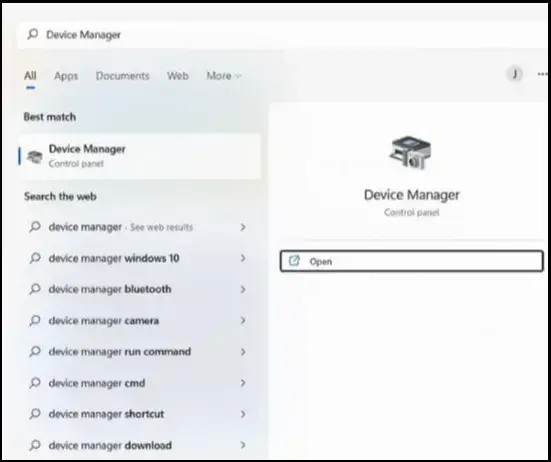
- Press Windows + S and search for Device Manager.
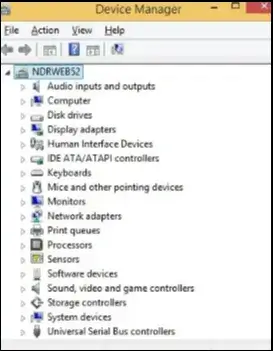
- Then double-click on the Display adapters node to view the graphics card.
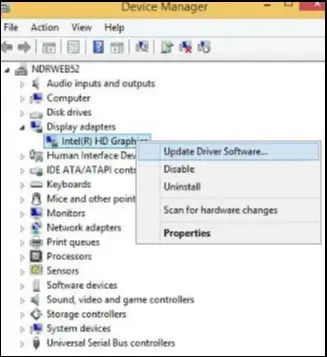
- Then, right-click on the graphics card and select the Update Driver from the options given.
- After that, select search automatically for drivers from the options given on the Update Drivers page.
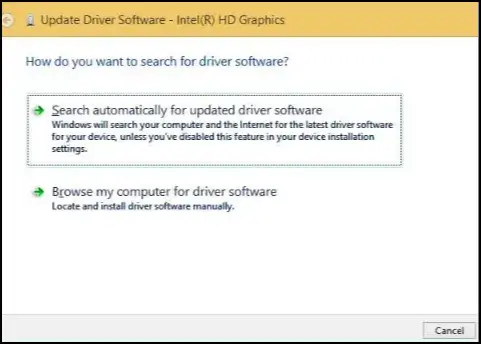
- Now, wait for windows to search for the best suitable driver and install it.
Way 2. Play Videos In 4K Compatible Player
Some media players, like Windows Media Player, may not support 4K videos. It might be because the media player is outdated, or it is lacking the codecs that support 4K format. You can use any 4K compatible video player like a DivX player or the Movies & TV app to fix unable to play 4K videos on PC.
Way 3. Change the Video Output Settings
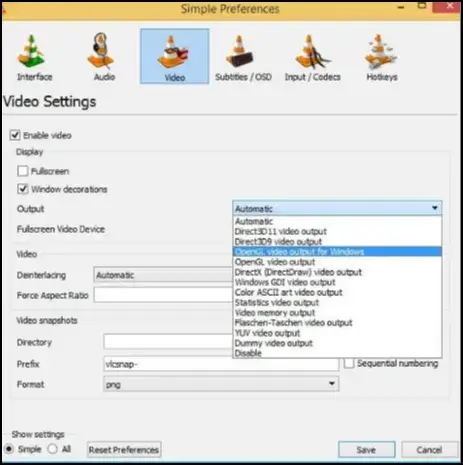
For many users, changing the current video output to DirectX DirectDraw or OpenGL makes the 4K HD videos playable in VLC Media Player. Here’s how to change video output settings in VLC Player:
- Open the VLC media player first.
- Then select the Tools option and opt for Preferences.
- Then switch to the Video option under the Output section.
- Select the desired output settings and Save the settings.
- Run the 4K video and check whether the error is solved.
Way 4. Enable GPU Acceleration in VLC Media Player
The 4K UHD videos require immense processing power. So, follow the below steps to enable the GPU-accelerated decoding feature in VLC.
- Open your VLC Player.
- Click on Tools at the top.
- Then click on Preferences.
- Now click on Input & Codecs.
- In the Input & Codecs Settings window, find “Hardware accelerated decoding” under Codecs.
- Change the default “Disable” to “Automatic.”
- Now click on Save.
- Then restart VLC to enable the changes.
- Increase the Cache value.
Note: This method can be used when your 4K UHD videos stutter in VLC Media Player. If you do not find the Cache option in your VLC Player, please update it. Also checkout the guide to repair corrupt MP4 video.
Way 5. Set the Power Option to High Performance
Battery performance may interrupt the smooth playback of 4K video files. So, set the performance mode to High to solve the 4K video not playing error.
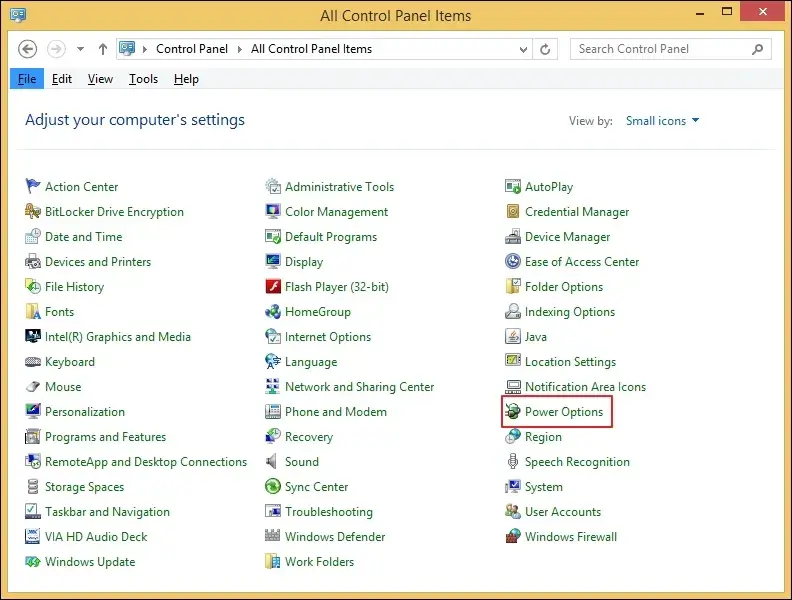
- Access the Control Panel and go to Power Options.
- Show additional plans and check High performance.
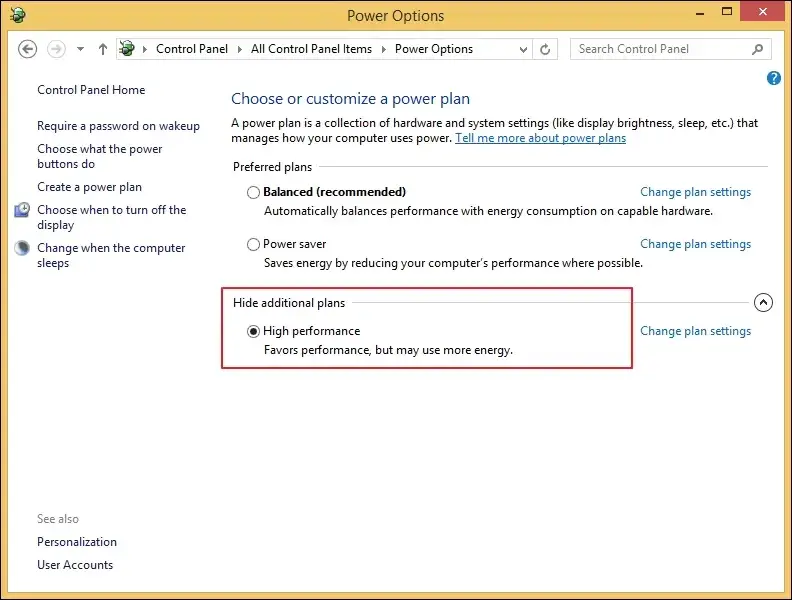
- It will fix all the power-related issues & help in smooth playback.
Way 6. Fix the Corrupted 4K Video File Using VLC
You tried all the listed solutions, and still 4K video is not playing; then it means the file is corrupted. So, use the VLC media player to repair minor-level inconsistencies. Here’s how:
Note: This method only repairs damaged or incomplete AVI files. So, change the format before you apply the given steps.
- Launch VLC and go to Tools option.
- Then, click on Preferences to continue.
- Navigate to Input/Codecs tab and choose the Always fix option.
- Then, tap on Save option to fix the added files automatically.
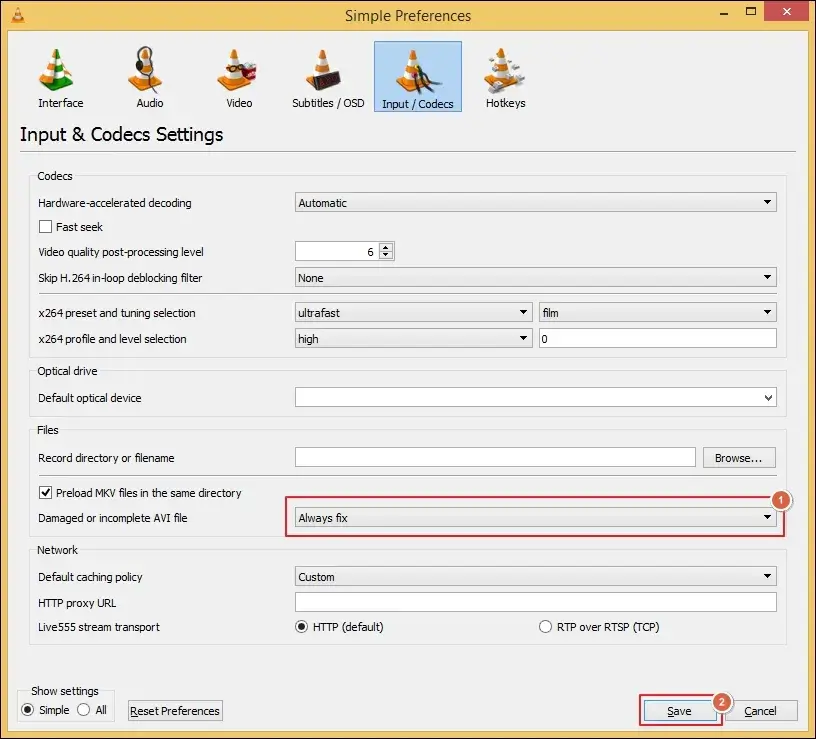
Please note, the VLC media player may help you fix corrupted 4K video, but its support for AVI file repair or minor corruption removal can limit applicability to specific conditions.
Therefore, using our Recoveryfix Video Repair tool is one of the reliable approaches. The software helps you repair damaged or corrupted video files of almost every format. You are just three steps (Add, Repair, & Save) away from smooth 4K video playback.
Final Words
Here, we have highlighted multiple solutions to fix 4K video not playing on PC. The blog contains both manual and dedicated ways to resolve the error. Apply native solutions to fix compatibility or settings-related issues, and the recommended one to recover video files from severe corruption or damage. The software fixes multiple video files without disrupting the original video quality.