Methods to Export EDB Mailboxes to PST [Manual or Automated]

Updated On - July 14, 2026
An EDB file is a Microsoft Exchange Server database file, which accommodates mailboxes of different users. While EDB files work smoothly within an Exchange environment, there are many situations where organizations need to convert them into Outlook PST files for better accessibility, migration, backup, or recovery.
This Exchange EDB conversion is helpful if you’re:
- Replacing an Exchange Server.
- Archiving employee mailboxes.
- Fulfilling compliance requirements.
- Responding to an unexpected server failure.
In the newest versions of Exchange, it is easy for administrators to export mailboxes from EDB files to PST. Unlike the PowerShell cmdlets to export mailboxes to PST, EAC offers a simple GUI that anybody can use without any technical complexities.
Why Do I Migrate EDB Mailboxes to Outlook PST?
Let’s understand the reasons to export EDB mailboxes to PST:
- Migration to a newer Exchange Server version or Microsoft 365.
- Helps in securing important information before recovery or migration.
- To retain important business records by archiving inactive employee mailboxes.
- Get archived mailbox data for audits, legal discovery, & compliance purposes.
- Reduce database size & improve overall Exchange efficiency.
- Get protection against accidental deletion, database corruption, or server outages.
- Create a complete backup.
- Verify administrative permissions.
- Configure a shared Network folder.
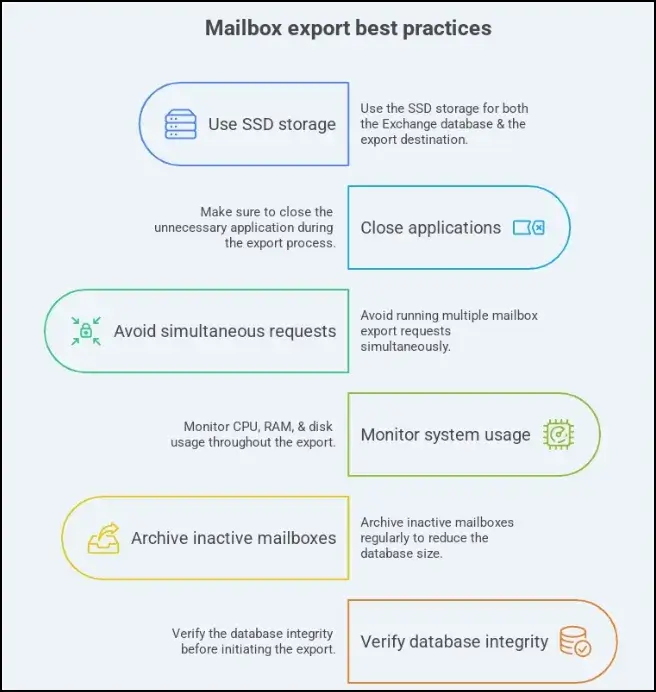
- Perform the export during off-peak hours.
- Check database health & verify storage space.
Export EDB Mailboxes to PST Using Exchange Admin Center
Exchange Admin Center (EAC) provides a manual method for exporting mailboxes from EDB files to PST. The steps are mentioned as follows:
Note: This method is suitable when:
- You only need to export active mailboxes.
- The Exchange database is healthy & mounted.
- Mailboxes are accessible & administrative permissions are available.
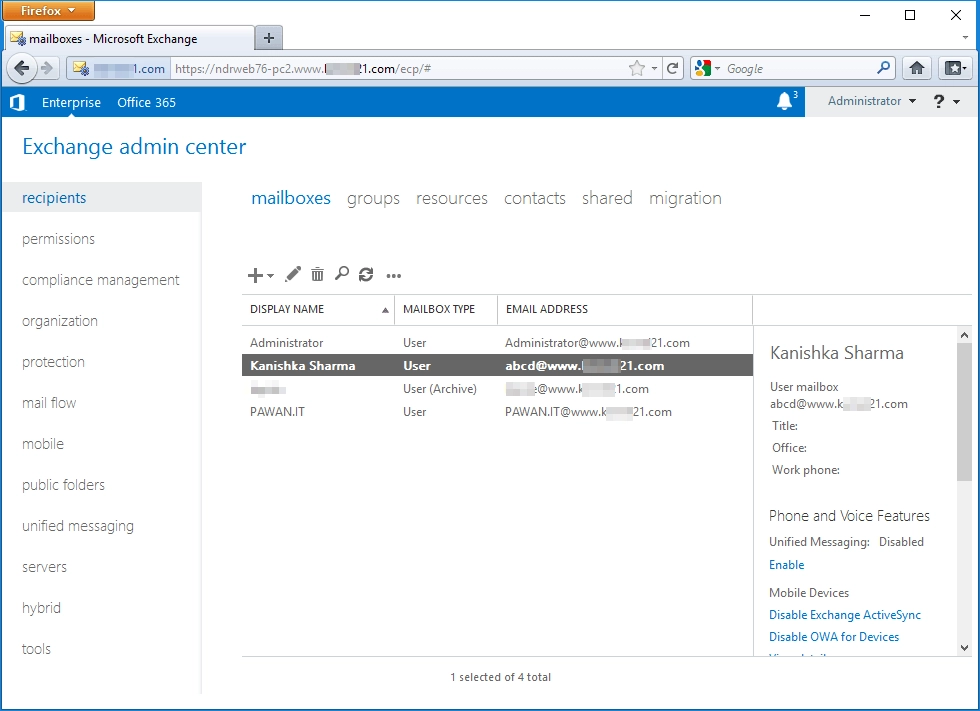
- Login to Exchange Admin Center as an Exchange administrator and navigate to recipients > mailboxes.
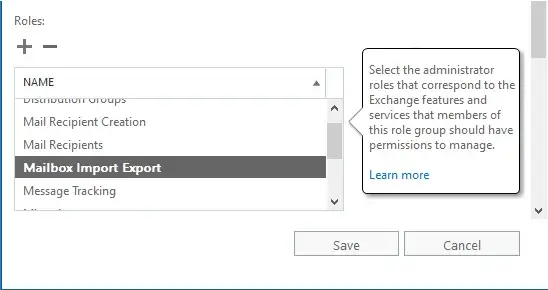
Note: Before starting the migration process, you need to assign the Mailbox Import Export Role to the user who is migrating EDB files to PST. For this, navigate to permissions > admin roles > Organization Management > Edit > Roles. Then, assign it as a new role to the administrator.
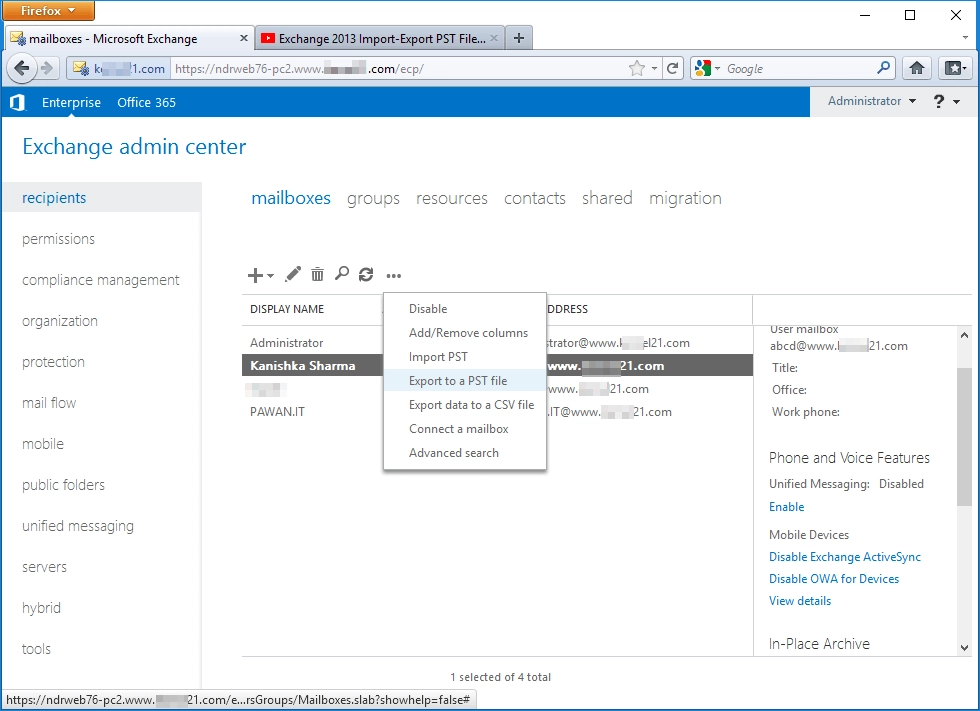
- Right-click on the mailbox to be exported and choose Export to a PST file.
- Then, click >Browse to select the mailbox you want to migrate, choose relevant options, and click Next.
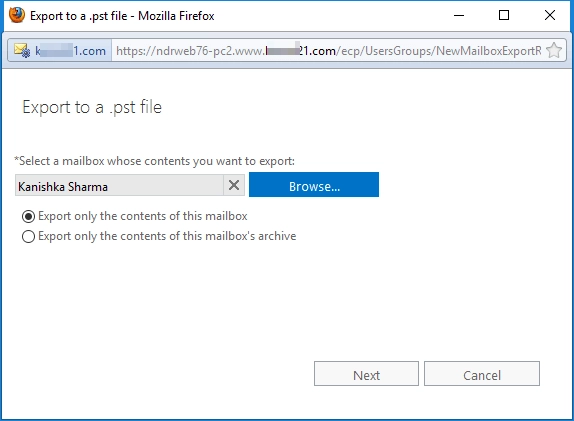
- Enter your specified file saving location and click Next.
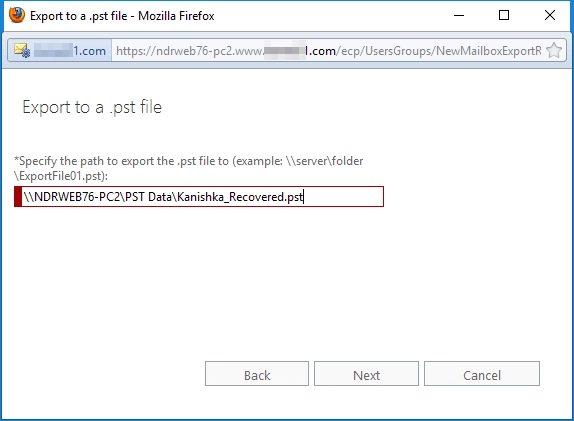
- Check the email option and browse for the mailbox name that is to receive an email notification; then click on ok Finish
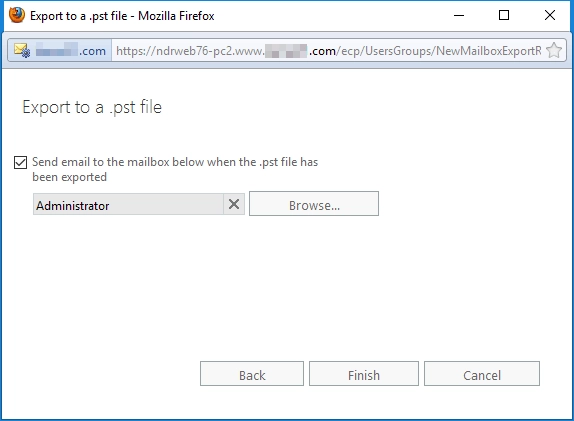
- Go to the location you specified for saving PST file, and you will find the exported mailbox there.
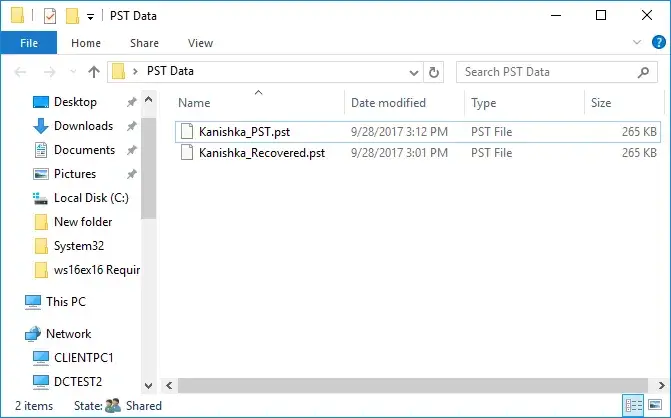
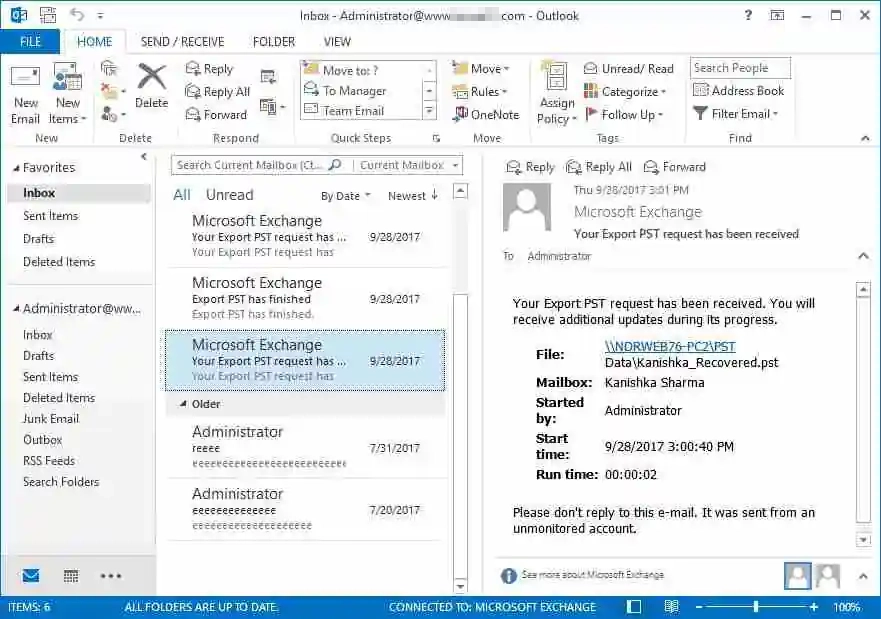
- Additionally, you will get an email in your specified mailbox once the process is completed.
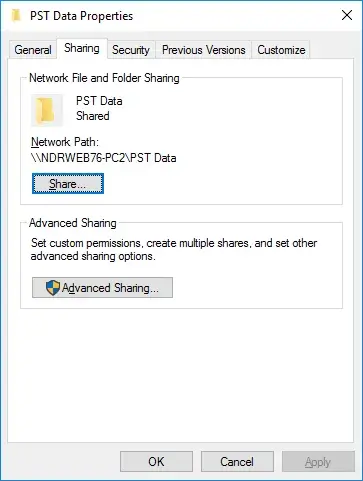
Note: Your file saving destination must be a shared network path. For this, right-click on the folder created on a network location and click on the Properties option. Move to the Sharing tab and use the Share option to create a shared folder.
We have just gone through the manual way, i.e., the use of the Exchange Admin Center to move Exchange database mailboxes to Outlook PST file. But it comes with certain limitations, such as:
- It is tiresome and technical in nature.
- Limited filtering & preview capabilities.
- Bulk mailbox exports can be time-consuming.
- Doesn’t support offline or dismounted Exchange databases.
But we have another option along with us, which is moving EDB data to PST via a professional utility. In addition, it helps to repair corrupt EDB files along with a secure transfer.
Use a Professional Tool to Export EDB Mailboxes to PST
Recoveryfix for Exchange Server recovery is an intelligently designed tool for exporting mailboxes from EDB files to PST, Live Exchange, and Office 365. This utility helps users in repairing damaged EDB files and recover deleted data. It is enabled with two modes: Standard Scan mode and Deep Scan mode. You can choose any according to your requirement.
With the use of this EDB to PST converter software, you can quickly migrate your mailboxes, public folders, and archive mailboxes from the source (EDB file, live Exchange, Office 365, etc.) to the desired destination (PST file, live Exchange, Office 365, etc.).
Common EDB to PST Export Errors with their Causes & Solution
| Error | Cause | Solution |
|---|---|---|
|
Mailbox Export Request Failed |
Mailbox Import Export management role has not been assigned. |
Assign the required management role & restart the export request. |
|
Access Denied Error |
Exchange trusted subsystems don’t have permission to access the destination folder |
Grant read and write permissions to the shared network folder before initiating the export. |
|
Invalid Network Path |
The specified destination is a local drive instead of a shared UNC path. |
Use a valid shared network folder, such as: \\ServerName\SharedFolder |
|
Corrupted Exchange Database |
EDB file contains logical corruption or severe database damage. |
You need to repair the database to restore its original functionality. |
|
The destination drive doesn’t have enough free storage. |
Verify available disk space before exporting large mailboxes. |
|
|
Slow Export Performance |
Server resources are heavily utilized. |
Schedule exports during non-business hours & avoid running unnecessary background processes. |
Final Words to Export EDB Mailboxes to PST
Exporting mailboxes from EDB files to PST using a manual method is quite challenging. Any incorrect step can cause permanent data loss. Also, using EAC, you can only export one mailbox at a time. Therefore, depending upon the number of users, the export may take substantial time.
So, I suggest using the suggested tool for effortless Exchange EDB conversion. It’s an award-winning tool specially designed for handling such issues. It is more accessible with many advanced features and provides an easy way to move Exchange database mailboxes to Outlook.