Fix SQL Server Database Corruption Issues

Updated On - May 14, 2026
The database was working normally until SQL Server suddenly marked it as “Suspect”. No warning. No unusual activity. Just a failed application connection followed by database inaccessibility.
Queries stopped executing, users lost access to records, & consistency errors started are the signs of a serious database corruption issue. In most cases, corruption starts silently through damaged storage sectors, incomplete transactions, unexpected shutdowns, or failed write operations.
When the issue is visible, critical MDF database structures may already be affected. That’s why understanding the causes & implementing the right approach is very important to fix SQL Server database corruption issues.
Want to Repair Corrupt SQL Database? Know Symptoms First
Here, we have provided some common indicators for SQL corruption. Let’s look one by one:
- Database enters Suspect mode.
- SQL consistency errors appear.
- Queries fail unexpectedly.
- Tables become inaccessible.
- SQL Server crashes during operations.
- Database recovery process fails.
Types of SQL Corruption: Identify Your One
Look at some common types of SQL corruption that can help you in fixing SQL Server database corruption.
- SQL page-level corruption: Page-level corruption occurs due to factors like hardware issues, faulty updates and patches, disk/sub-system failure, malware, etc.
- Boot page corruption:This is a more crucial case of SQL database corruption, which can affect the whole database file because it contains metadata of the integrated database.
- Non-clustered index corruption: It typically occurs when a SQL database administrator attempts to execute a complex UPDATE statement with a NOLOCK hint against records. Non-clustered index corruption leads to incorrect reading of the SQL database query or multiple read operations on the same value.
- SQL database in suspect mode: DBAs face this issue frequently due to damage in the primary file group file, which pauses the database recovery process during SQL Server startup.
Note: There is transaction log corruption too, which occurs due to damaged LDF files. As a result, it interrupts recovery & rollback operations.
Reasons Behind SQL Database Corruption
MDF files are the primary database files that contain crucial data, and corruption occurs most commonly in these files. There could be various reasons behind SQL database corruption, such as:
- Power failure or improper shutdown of the system.
- Data storage failure where MDF files are stored.
- Making changes in the SQL Server account.
- Storing SQL database in compressed folders.
- Network failure with the database in working condition.
- Server affected by a virus/malware.
- Bugs in disk drivers.
These are the reasons that can corrupt SQL databases easily. While accessing the corrupt databases, these errors may be encountered:
MSG 823/824/825 error in SQL Server
Error 9004 in SQL Server
Metadata Corruption Error
SQL Server Page Level Corruption
Methods to Fix SQL Server Database Corruption Issues
Repairing a corrupt SQL database is not easy; it requires complete technical knowledge to fix the corruption. However, there are some manual methods that can be used to solve SQL database corruption.
Method 1. Using Log Files
Log files of SQL can be used to restore the SQL database, but severely corrupted files can’t be backed up using this method.
Method 2. With the DBCC CHECKDB/DBCC DEBREPAIR Command
With the DBCC CHECKDB command, users can easily fix SQL Server database corruption issues. Follow the steps below.
- Run DBCC CHECKDB on the corrupt database.
- Check the index ID. If it is greater than 1, drop and recreate it, and then re-run the console command.
- If the corruption is fixed after running the command, a message will appear on the screen displaying: “DBCC CHECKDB found “0 allocations” errors and “0 Consistency” errors in “Name of your corrupt database.””
Method 3. With MS SQL Server Management Studio
SQL Server Management Studio by Microsoft can resolve most of your issues with the SQL database.
- Install and run “Microsoft SQL Server Management Studio.”
- Now, connect it with your SQL database and click on “New Query.”
- You need to write a SQL script – “Reset Status,” with your database name in the “New Query” page, and then execute this script.
Running this script will fix the major issues in your SQL server database.
Method 4. Set the Database in Emergency Mode
With the help of Emergency mode, administrators can access a corrupted database temporarily. As a result, controlled consistency validation or recovery operations can be performed safely. Let’s understand the steps to implement the method:
- Connect through Management Studio & open query window.
- Set the database into EMERGENCY mode with:
ALTER DATABASE [DB_Name] SET EMERGENCY; - Then, run recovery operations carefully.
Challenges During SQL Database Recovery
Improper repair attempts can increase the risk of data loss. Look what SQL recovery operations often involve:
- Page-level inconsistencies.
- Inaccessible transaction logs.
- Damaged indexes.
- Missing metadata.
- Severe storage corruption.
Alternate & Instant Solution: Avoid Data Loss Risk
If you want to avoid the hassle of manual methods and don’t want to risk losing your data, then Recoveryfix for SQL Database Recovery is the best alternative to it. It is an advanced and specially designed tool to recover and repair SQL Databases. It is enriched with great features to restore corrupt MDF files. Some of these include:
- Fixes all corruption issues of SQL files
- Recover data from damaged SQL databases
- Offers Server and Batch saving modes for recovery
- Suitable for recovering all SQL database components
- Maintains the data integrity of the SQL database
- Preview recovered data before saving.
Whatever corruption error you are facing with the SQL database, our standalone software can fix them all efficiently.
Know the Simple Steps to Run the Tool
It is quite easy to use the software. Detailed steps are given below for better guidance:
Step 1: Download and install the software on your system.
Step 2: Launch the software to repair corrupt SQL Database.
Step 3: Browse to add corrupted MDF files in the software and select recovery mode as needed. After that, check the Auto-detect database version to fetch it automatically and choose a suitable Collation Option. Finally, tick Include deleted records in recovery option if required and proceed to Recovery.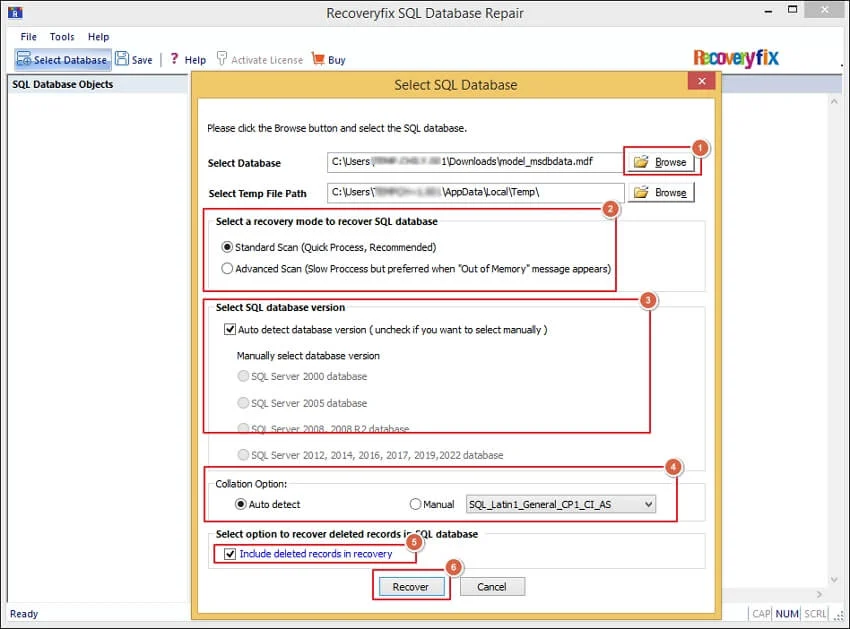
Step 4: The software will start the SQL Database repair process.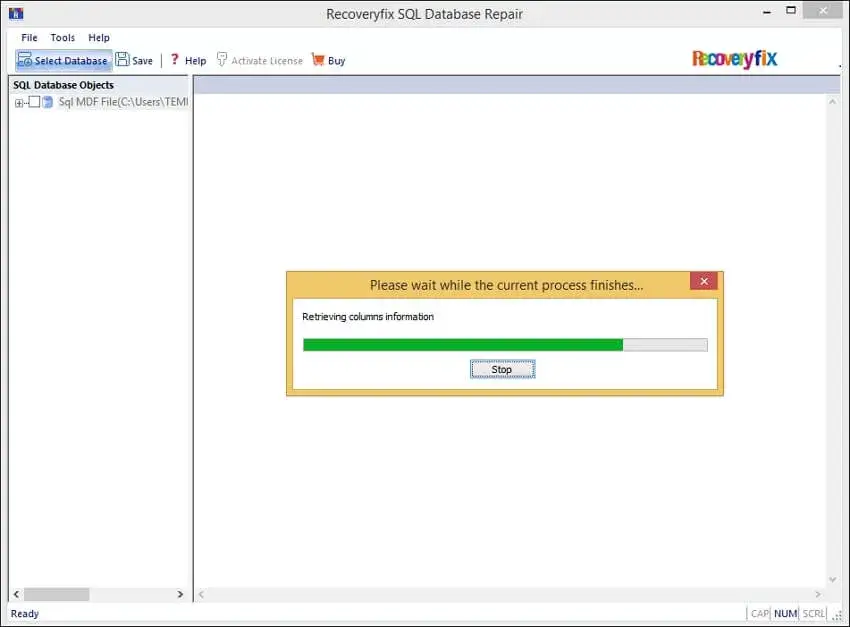
Step 5: All the database content will be displayed on your screen. Expand folders to preview them. Check the required folders and click Save.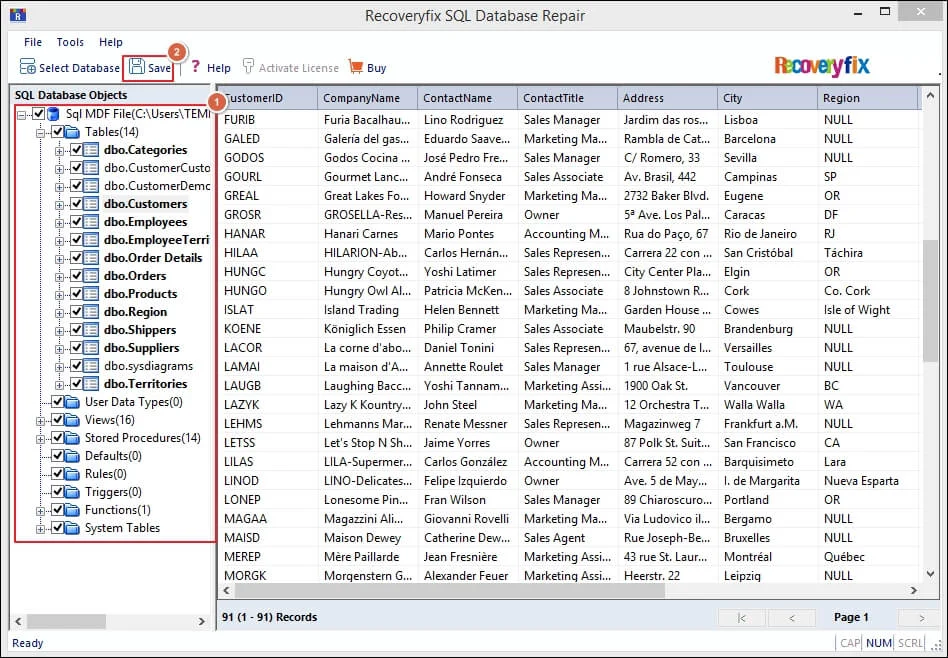
Step 6: Select Save as SQL Script option, Browse to provide saving location, and click OK to proceed.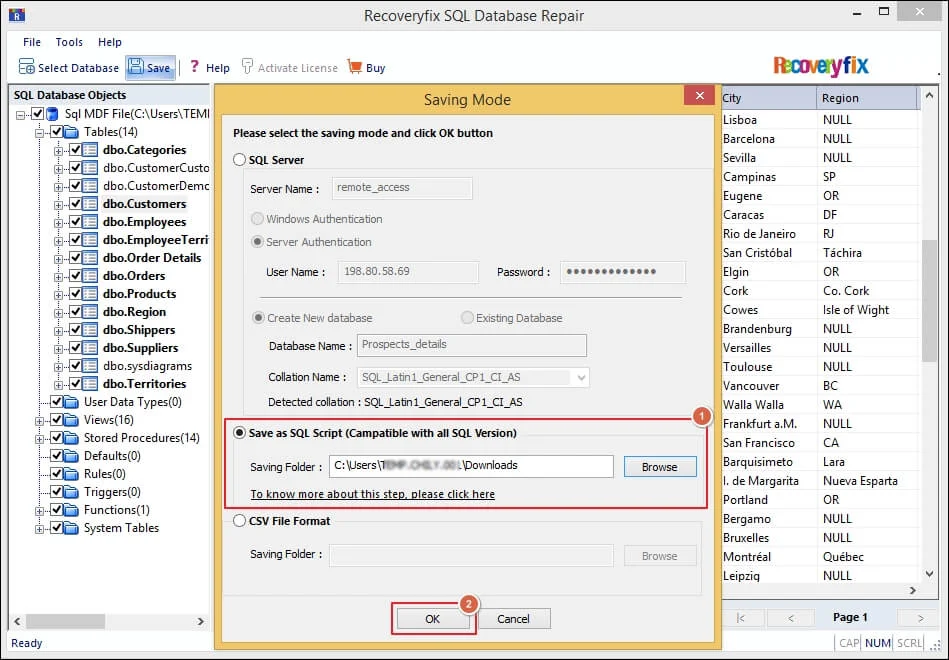
Step 7: You will be notified with a pop-up message when the database is saved successfully. Tap on OK to end the process.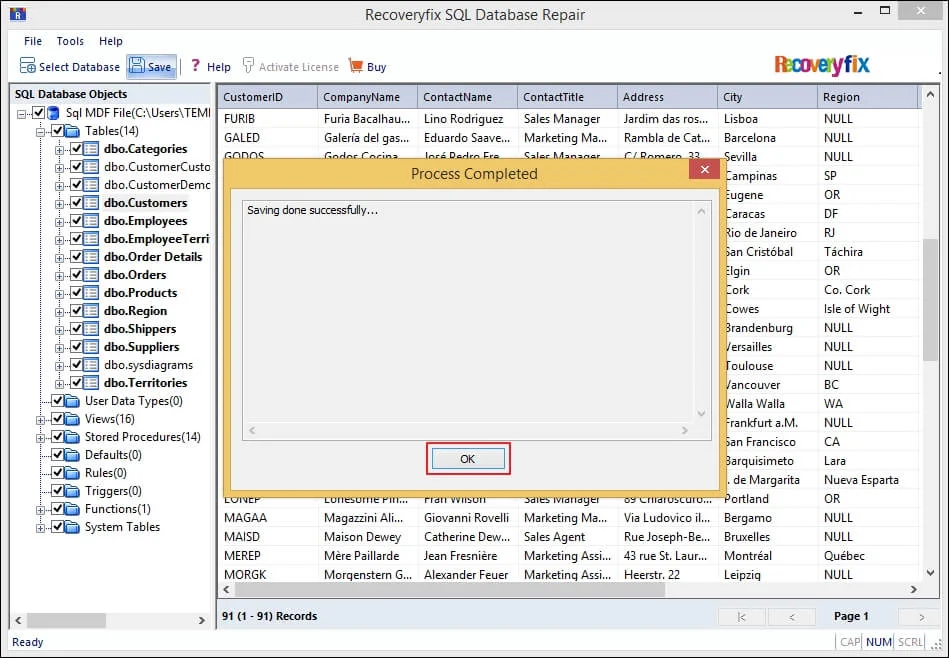
Final Words to Fix SQL Server Database Corruption Issues
Immediate repair without understanding the actual corruption can cause complexity. I hope that with this easy write-up, you have all the needed answers to solve SQL database corruption. But if the issue persists, it implies severe database corruption. Then, you must try the suggested advanced solution.
FAQs
Q. Can MDF files become corrupted without hardware failure?
A. Yes. Sudden shutdowns, malware attacks, & SQL process interruptions can also cause corruption.
Q. Can corrupted SQL databases affect backups?
A. Yes. With the repeated backups of corrupted databases, it can be a tedious task to remove existing inconsistencies.
Q. Is it possible to recover every corrupted SQL database?
A. It depends on corruption severity, backup availability, & database structural condition.
Q. Can you differentiate between logical & physical SQL corruption?
A. Logical corruption affects consistency, while physical corruption damages actual database storage structures.