YouTube videos not playing in VLC: Fixed

Updated On - June 29, 2026
YouTube is the world’s largest video-sharing platform, with billions of videos. YouTube videos are also available to stream on various media players.
VLC media player provides the feature to stream a YouTube video along with its other unparalleled abilities. Users do not have to worry about the annoying ads they must watch with every video, these ads are skipped automatically in VLC. Also, users get more control over the video’s playback speed. These features force users to stream YouTube videos through VLC rather than using Chrome or another browser.
However, housing so many features increases the application’s complexity, often leading to issues like the inability to stream YouTube videos. Moving ahead in this blog, we will understand multiple methods to resolve the inability to stream YouTube videos on VLC.
Methods to solve the YouTube videos not playing in VLC issue
Now let’s discuss standard solutions for resolving your problem and getting you back on enjoying add-free YouTube watching like before.
- Modify Preferences: VLC > Tools > Reset Preferences.
- Turn off Hardware-acceleration decoding: Press Ctrl+P> Input/Codecs > Disable.
- Change the Output mode: Video > DirectX (DirectDraw) video output.
- Disable Cookies forwarding: Access modules > HTTPS > Uncheck Cookies forwarding.
- Increase VLC Cache Size: Input/Codecs > Increase File caching (ms) & Network caching (ms).
- Update YouTube Luac Script File: System Directory > Luac file > Paste GitHub.
Method 1. Reset the Preferences
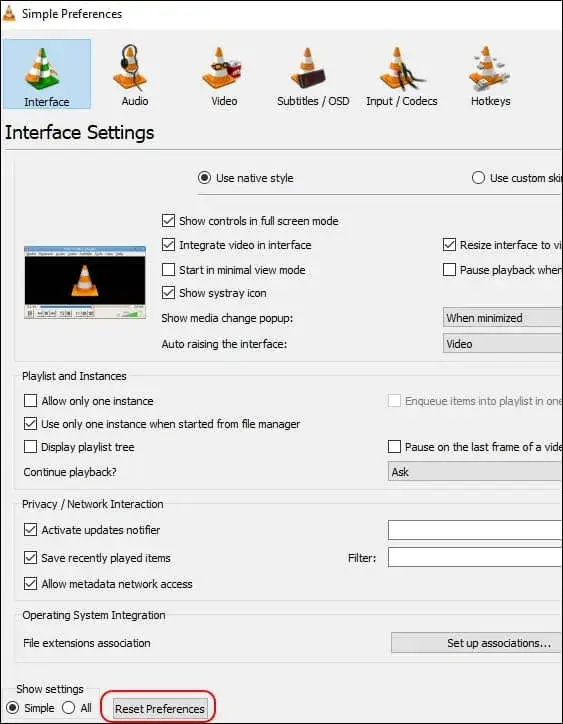
Users often make changes in settings to suit their preferences. That change might cause an issue with the new version of VLC. Users can try to reset all the settings to their default initial value to resolve the YouTube videos not playing error in VLC.
- To reset it, open VLC, click Tools > Reset Preferences, and click the Reset Preference button.
Method 2. Disable Hardware Acceleration Decoding
VLC Player uses computer’s graphic memory to perform hardware-accelerated decoding on videos to provide a smoother viewing experience. But sometimes, this decoding might interfere with video streaming. Therefore, users must disable it and try to stream the YouTube video again.
To disable it:
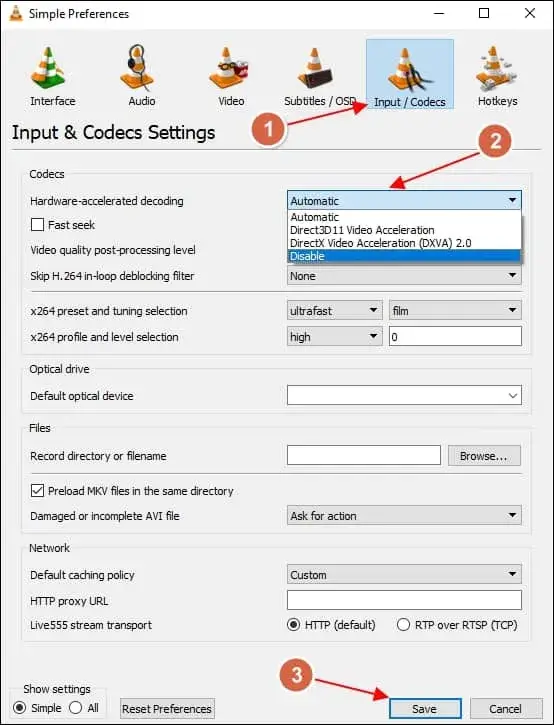
- Open VLC and press Ctrl + P. It will open preference window.
- Now click Input/Codecs, and under the Codecs section, you will find Hardware-accelerated decoding option.
- Change it from Automatic to Disable. Click Save to exit.
Method 3. Select video output mode to Direct X
VLC for Windows plays the videos in OpenGL video output for Windows video output mode by default. This mode can cause YouTube videos not playing issue in VLC. Change the mode to DirectX(DirectDraw) video output mode to solve the problem.
To change it:
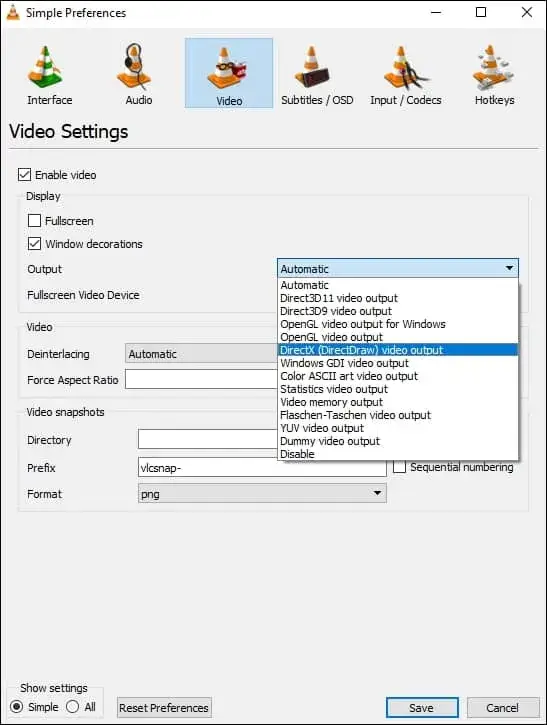
- Open VLC and press Ctrl + P to open preferences.
- Click on the Video option, and under it, change the value for Output from Automatic to DirectX(DirectDraw) video output.
- Click Save and exit.
Method 4. Disable Cookies Forwarding
VLC uses an in-built plugin that fetches data and plays YouTube videos using cookies. The cookies request that YouTube let VLC stream the video. Sometimes, an issue with the cookie data can cause the error YouTube videos not playing in VLC. Therefore, disabling the cookies forwarding will help the user to resolve the problem.
This method poses a threat to your system’s security. Therefore, ensure you have a reliable and trusted network before you proceed. Also, as a preventive measure, you can back up your crucial files to safeguard them.
To disable the Cookies forwarding, do the following:
- Open VLC.
- Open preference window by pressing Ctrl + P.
- In the bottom-left, select All under Show settings.
- Double-click Access modules under Input/Codecs section to expand it.
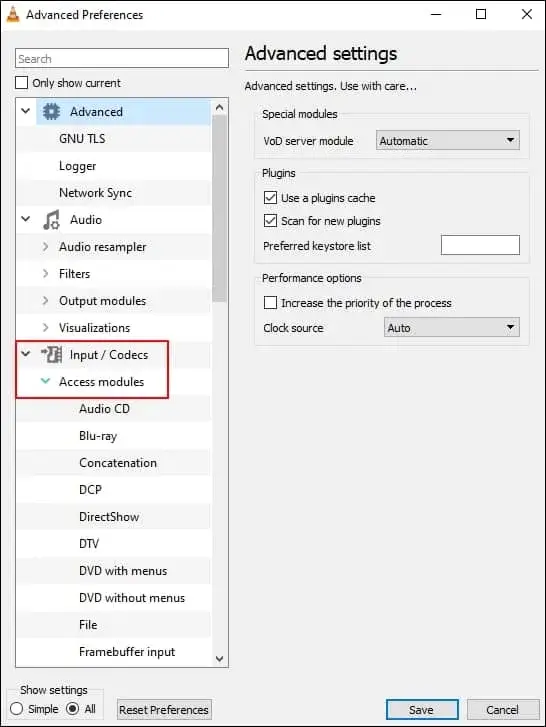
- Scroll down and select HTTPS, then unselect the Cookies forwarding that appeared on the right side.
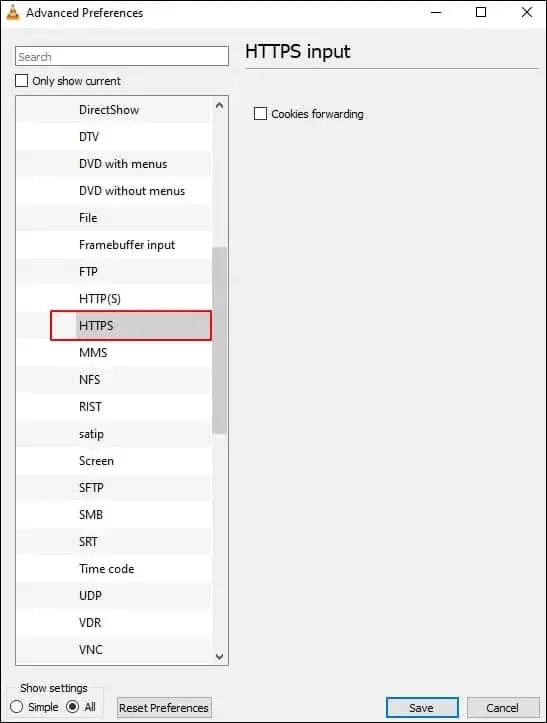
- Click Save to exit.
Method 5. Increase Caching Size in VLC
Increasing the cache size will ensure smooth video playback in VLC. Network cache helps maintain smooth video playback when streaming video over the internet. Expanding the network cache will help stream videos with low or poor internet bandwidth, while increased file caching will help play videos stored locally.
Note: Increasing the cache size may resolve the issue of YouTube videos not playing in VLC but will result in a longer delay time for video playback.
To increase the cache size, follow the steps:
- Open VLC and press Ctrl + P to open preferences.
- Now, at bottom left, under Show settings section, select All.
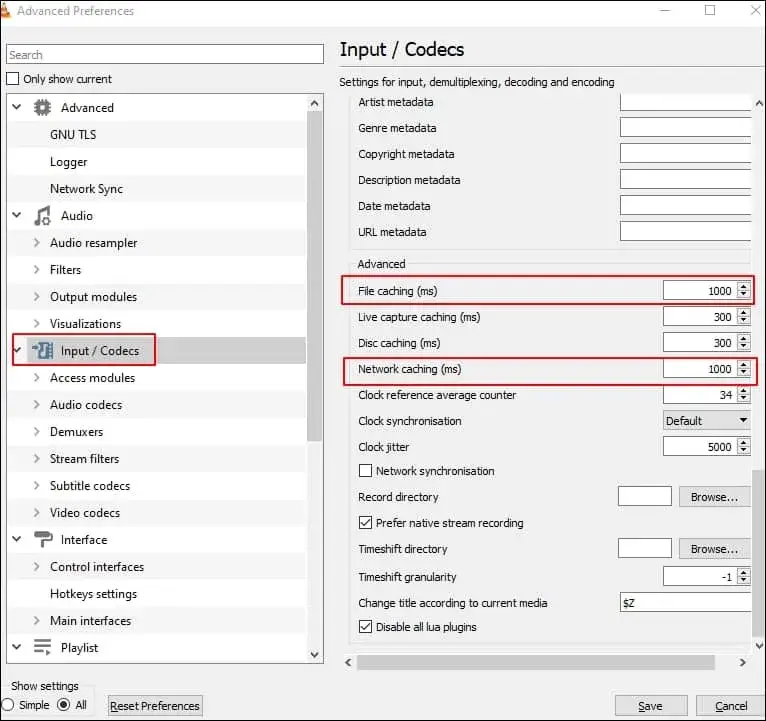
- Click Input/Codecs. Now, on right side section, scroll down to the Advanced section.
- Increase the value for File caching to 2000 and Network caching to 1500.
Method 6. Update YouTube.luac Script File
The youtube.luac script is required to play or stream videos from the network. Therefore, an outdated or broken script will introduce the YouTube videos not playing in VLC error. Update or replace the script with the latest one to resolve the YouTube video playback error.
Note: If the folder contains youtube.lua file with a .lua extension, and then change the extension to .luac. After that, try to play a YouTube video again, and if the issue persists, then update the script with the new one.
To update the script, follow the steps:
- Navigate to the directory:
- For 32-bit version:
C:\Program Files (x86)\VideoLAN\VLC\lua\playlist - For 64-bit version:
C:\Program Files\VideoLAN\VLC\lua\playlist
- For 32-bit version:
- Open the youtube.luac file with Notepad.
- Visit this Github link and copy the script.
- Replace the old script from youtube.luac file with the new one you copied from the GitHub link. Save and close the file and restart the VLC.
What if VLC Failed to Play Downloaded YouTube Videos? – Try Advanced Tool
Most of the downloaded YouTube videos use AV1 Codec for compressing. This codec can store high-quality videos and requires comparatively less storage space. However, sometimes, VLC might struggle to decompress the file effectively and thus fail to play them. In such a situation, the user can try converting the video format to mp4, mkv, etc. This will resolve YouTube videos not playing in VLC issue caused by AV1 codec.
Often, when users download videos from YouTube, the file can get corrupted due to network failure or incomplete download. In this case, users must repair the video file with recovery tools like Recoveryfix.
The Video Repair is an excellent tool that uses powerful algorithms and accommodates several advanced features. It can swiftly repair corrupted video files, is compatible with all video file formats, and provides an accessible user interface with short operation time.
Final Verdict
Watching videos from YouTube without ads is a treat for users, and VLC offers this without charge. We hope the methods you got in this article helped you in resolving YouTube videos not playing in VLC. However, if the VLC failed to play the downloaded video files, go with the recommended solution. The software supports bulk video file repair without imposing file size restrictions.
FAQs: Instant Query Resolution
Q- How to fix VLC Media Player not playing YouTube videos?
Ans- You can fix the issue using the given solutions:
- Update YouTube.luac script file.
- Reset the set preferences.
- Turn off Hardware Acceleration.
- Increase caching size in VLC.
- Disable forwarding of cookies.
Q- Why is VLC not playing YouTube Videos?
Ans- There are the common reasons behind this issue:
- Outdated YouTube.lua script.
- Changed Youtube streaming APIs.
- Network or caching issues.
- Hardware acceleration conflicts.
Q- Is it possible to stream online videos other than YouTube in VLC?
Ans- Yes, you can stream videos apart from YouTube using the Open Network Stream feature. It supports platforms like Dailymotion, Vimeo, Flickr, Twitch & many more.
Q- How to play YouTube videos in the VLC mobile app?
Ans- Follow the provided steps to play YouTube videos in VLC mobile:
- Copy the desired video link.
- Access the VLC Media Player.
- Go to Menu and click on Stream.
- Paste the link in the Enter network address and hit Play.
Q- Can I play YouTube videos directly in VLC?
Ans- No, VLC uses scripts to play videos. But when YouTube updates its API, then playback fails.