Imagine an employee of your company has an NST file with some important data but they’re unable to open it because they don’t have access to their Outlook profile or the Microsoft 365 account. The thing is, there’s no direct way to access or import an NST file without the Outlook profile it’s configured with. So, how exactly do you access the NST file data? You can try to convert NST to PST to easily access it in Outlook. This guide will help you out with a detailed process using the best method available.
What are NST files?
An NST file is a local offline data file, created by Outlook, that caches Office 365 group conversations, calendars, and shared mailbox data. It also stores some offline copies of IBM Domino data if you’ve configured the required add-in for it in your Outlook account. These files are automatically created along with OST files when you configure your Office 365 account. Like OST files, these files also sync changes made in offline mode when the host server connects with the Outlook account. Another characteristic of this file is that it can’t be viewed as a separate document outside of Outlook, without the account it’s configured with.
How to Locate NST Files on Your System?
You must know the location of NST files on your computer before you try to convert NST file to PST format. Although, the exact location of NST file depends on your system’s Outlook and Windows version, the default location of these files in most systems is: C:\Users\%username%\AppData\Local\Microsoft\Outlook
Why is NST to PST Conversion Necessary for Outlook Users?
Convert your files into PST format to avail several advantages. Here, we have listed the most common ones:
- Access emails, contacts, and calendar data without an internet connection.
- Backup important data and keep them safe even in their original structure.
- Migrate mailbox data to a new Outlook profile or new device with ease.
- Prevent frequent syncing issues to restore email access with PST files.
- Export mailbox data in just a few clicks for legal or compliance needs.
- Fix corrupt NST files and recover lost emails by converting them into PST format.
- Reduce Outlook storage load and optimize performance by archiving older emails.
- Transfer and access NST file data on any Outlook-supported system with simple steps.
The Best Method for NST to PST File Conversion
The manual methods won’t be a practical choice if you want to access an NST file without having the access to the Outlook profile that created it. Outlook doesn’t offer any way to convert standalone NST files to PST format. You need dedicated NST to PST Conversion tools to extract data from NST files and save it in PST format. Recoveryfix OST to PST Converter can be considered as a good option for this task as it converts your NST files into PST and other formats without disturbing the original file integrity. Besides that, the NST to PST converter tool provides several advanced features, including:
It converts your NST files into PST and other formats without hampering data integrity. Besides that, the NST to PST converter tool provides several advanced features, including:
- Migrates Outlook data files directly to Office 365.
- Repairs corrupted or damaged OST files immediately.
- Split the resultant PST files into smaller segments.
- Advanced data filtering options for selective conversion.
- Restores deleted items of the OST file in their original formatting.
How to Convert NST to PST Using This Software?
Step 1. Install and launch the software to begin the conversion process.
Step 2. Browse to add NST files, Select Mode as needed, and click Next.
Note: Choose Standard mode for quick scanning and Advanced mode for deep scanning & restoration.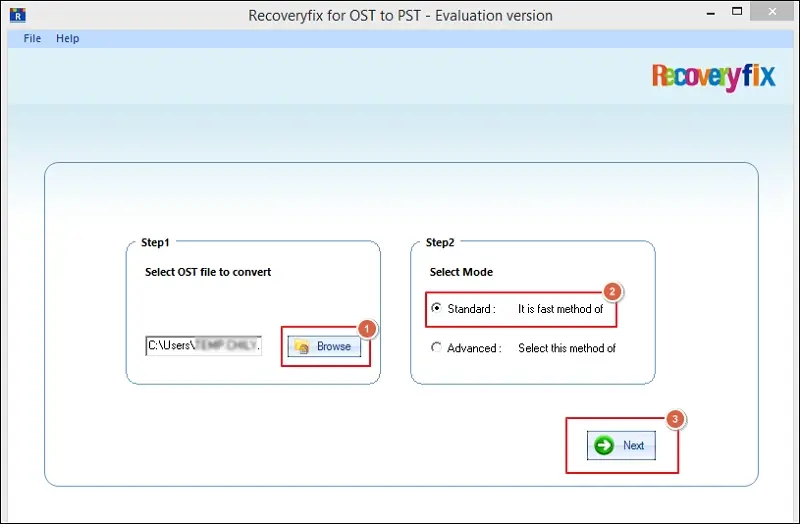
Step 3. Preview NST file content. Then, select the required folders and proceed to the Save option.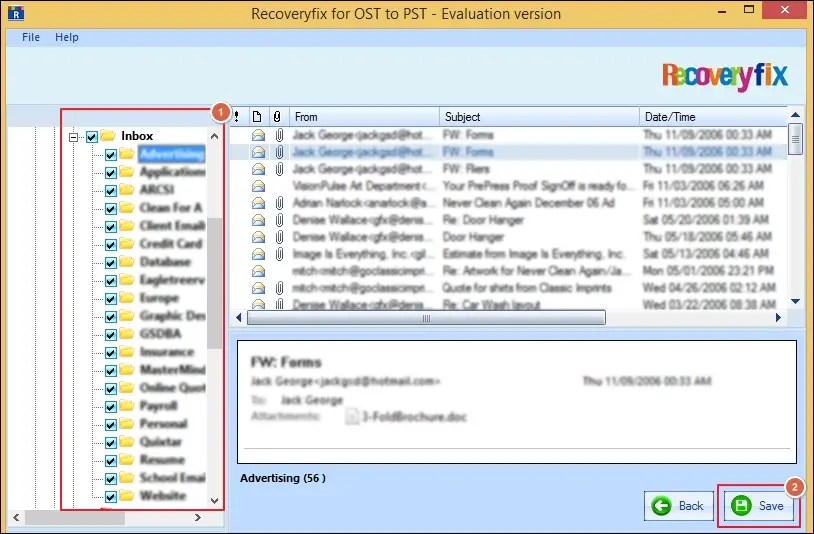
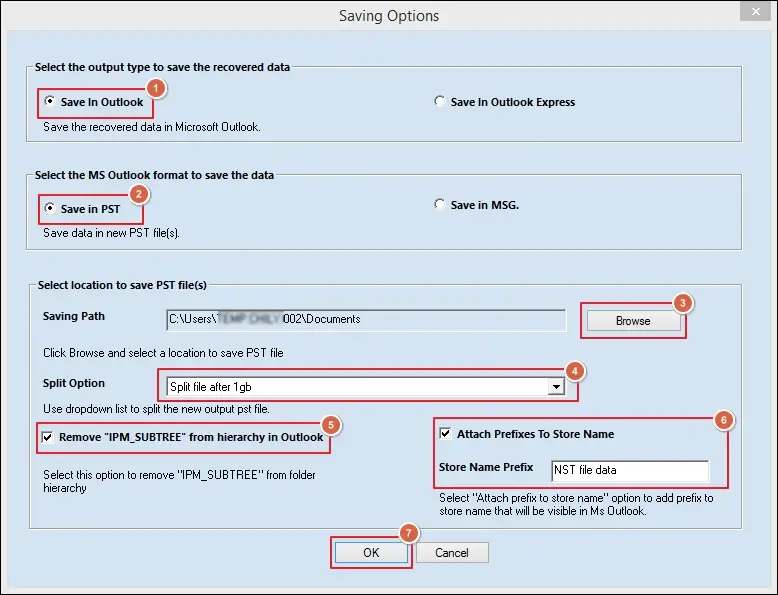
Step 4. From the Saving Options dialog box, do the following:
- Choose the Save in Outlook option as an output type.
- Click on Save in PST format option.
- Browse to provide the saving location.
- Use the dropdown list to split the resultant file.
- Check to Remove IMP SUBTREE from hierarchy in Outlook.
- Attach Prefixes to Store Name to the file for easy identification.
- Once done, click OK to proceed.
Step 5. You can select the folders from the local drive or Make New Folder from here and click OK.
Step 6. It will start converting your NST files.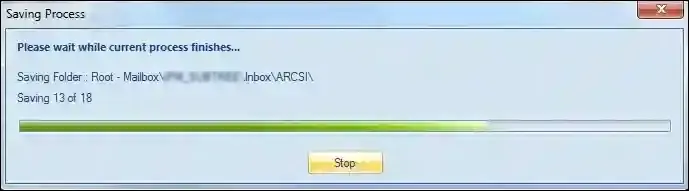
Step 7. After the process is completed, you will receive a pop-up message with the saved location. Then, click OK to end the process.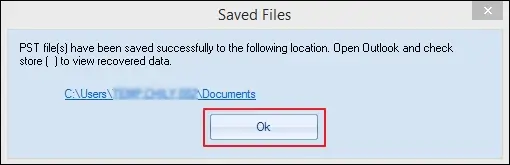
Conclusion
Here, we have covered a step-by-step guide on converting NST files into PST format using an advanced solution. Technically, there’s no manual solution available to convert NST file to PST format, especially if Outlook’s profile can’t be accessed. You can use the converter tool to convert NST files without any difficulty or prior technical knowledge required. If the conversion gets interrupted in between for whatever reason, the Snapshot feature of the tool comes in handy to resume the process from the exact moment it stopped. For more insights on the feature of the tool, take the free trial today.
Frequently Asked Questions
Q1. What is the difference between NST and OST files?
Ans. NST and OST files are both locally stored offline Outlook data files, but they’ve different purposes. While an OST file stores the complete mailbox data of an Exchange, Microsoft 365, or an IMAP account, NST file stores specifically the data related to Office 365 groups.
Q2. Does Outlook support opening standalone NST files directly?
Ans. No, Outlook doesn’t support opening of standalone NST files directly. If you need to open NST files but you can’t access your Office 365 account, you need to find a different way to access them.
Q3. Is there a size limit when converting NST to PST files?
Ans. If you use a NST to PST conversion software, the size limit depends on what’s the biggest size the tool can support.